How to Cook Chicken Wings: Crispy Grilled, Smoked & Flat Top Wings
Most wings fail in one of two ways. The skin comes out rubbery, or the sauce burns black before the meat is done. Both problems have the same root cause, and both are fixable with things you already have in the kitchen. Dry the skin, cook it long enough to render the fat, then crank the heat. Sauce goes on in the last ten minutes, never before. This guide covers the whole cook, from the fridge to the plate, for the grill, the smoker and the flat top.
What's in this guide
- Why wings go wrong
- Flats, drums and party wings
- The dry brine, and why baking powder works
- Times and temperatures
- Grill, smoker, flat top or oven
- Which wood to use
- Sauce timing, and dust versus glaze
- When are they done?
- Troubleshooting
- Rub and sauce pairings that work
- Wing recipes to cook next
- Questions we get asked
Why wings go wrong
Chicken skin is mostly water, fat and collagen. To go crisp, two things have to happen in order: the water has to leave, and then the fat has to render. If the skin is still wet when you start, all your heat goes into boiling off moisture instead of browning, and you end up with skin that is cooked but flabby.
The second failure is sugar. Almost every wing sauce worth eating has sugar in it, whether that's honey, molasses, brown sugar or the tomato base itself. Sugar starts to burn well below the temperature you need to crisp skin. Put sauce on at the start and you get a bitter black shell over undercooked meat.
The whole guide in one line: Dry the skin, cook it long enough to render the fat, then crank the heat. Sauce goes on in the last ten minutes, never before.
Flats, drums and party wings
A whole chicken wing has three parts: the drumette (the meaty piece that looks like a small drumstick), the flat or wingette (the two-bone middle section), and the tip.
Most bags labeled "party wings" or "wing sections" are already split into drums and flats with the tips removed. That's what you want for most cooks. If you buy whole wings, split them yourself at the joints with a heavy knife, and keep the tips for stock.
The two sections cook at slightly different rates. Flats are thinner and finish faster; drums hold more meat and take a few minutes longer. If you're cooking a mixed bag, pull the flats first or put the drums closer to the heat.
Plan on roughly a pound of wings per person as a main, or half a pound as a starter. That's about 8 to 10 sections per pound depending on size.
The dry brine, and why baking powder works
This is the single step that separates good wings from great ones, and almost nobody does it.
Pat the wings completely dry with paper towels. Then toss them in a mix of salt and baking powder (not baking soda) and leave them uncovered on a rack in the fridge for at least four hours, ideally overnight.
The ratio
For every pound of wings, use about 1 teaspoon of aluminum-free baking powder and half a teaspoon of kosher salt. Toss until every piece has a thin, even, barely visible coating. You are not breading them. If the wings look dusty white, you've used too much, and the finished skin will taste faintly metallic.
Why it works
Two things happen at once. The salt pulls moisture out of the skin and then carries seasoning back into the meat, which is the same reason a dry-brined turkey beats a wet one (more on that in our guide to grilling a turkey). The baking powder raises the pH of the skin's surface, and browning reactions run faster at a higher pH. It also leaves behind a very fine texture that gives the fat somewhere to go as it renders.
The uncovered rack matters as much as the powder. A fridge is a dehumidifier. Twelve hours of cold dry air pulls a surprising amount of water out of chicken skin, and dry skin is the whole game. Our Smoked & Glazed Maple Bacon Chicken Wings use this exact trick before the high-heat finish.
Common mistake: Baking soda is not baking powder. Soda is far more alkaline and will make your wings taste soapy. Check the box.
Where the rub goes
Add your dry rub after the brine, right before the wings go on the heat. If you put a sugar-heavy rub on twelve hours early, the sugar draws moisture back to the surface and you undo the work. A savory rub like Rufus Teague Chick N' Rub is fine either way, but sweeter blends should go on last. Browse every chicken wing rub and wing sauce we carry if you want to compare.
Times and temperatures
The reliable method for wings is two stages. Cook them low enough to render the fat without scorching, then finish hot to crisp the skin. Here's what that looks like across the common setups.
| Method | Stage 1 | Stage 2 | Total |
|---|---|---|---|
| Smoker, two stage | 250°F for 45 to 60 min | 425°F+ for 10 to 15 min | About 1 hr 10 min |
| Smoker, single temp | 275°F for 90 min to 2 hr | Optional 5 min sear | 1.5 to 2 hr |
| Charcoal grill, two zone | Indirect, 325°F, 25 to 30 min | Direct, 3 to 5 min, turning | About 35 min |
| Gas grill, two zone | Indirect, 375°F, 20 to 25 min | Direct, 3 to 5 min | About 30 min |
| Flat top or griddle | Medium, lid on, 15 to 18 min | High, 4 to 6 min | About 22 min |
| Oven | 250°F for 30 min | 425°F for 40 to 45 min | About 1 hr 15 min |
Treat these as starting points, not gospel. Wing size varies enormously between suppliers, and a windy 40-degree day will add fifteen minutes to any outdoor cook. The thermometer is the real answer, which we get to below.
Why the low stage first
Chicken skin is laced with fat that needs time at moderate heat to melt and run off. Go straight to high heat and the outside browns before that fat has rendered, which is exactly how you get skin that looks right and chews like a balloon.
Grill, smoker, flat top or oven
Smoker
Best flavor, most forgiving, slowest. The two-stage method works beautifully here. If your smoker won't get above 300°F, finish the wings in a hot oven or in a cast iron pan on the grill. Smoke without a crisping stage gives you the classic rubbery-skin disappointment, and it's the most common complaint about smoked wings. For a full smoker cook start to finish, try our Smoked Peach Bourbon Wings.
Charcoal grill
Bank the coals to one side. Wings go on the empty side with the lid on and the vents mostly open, then move over the coals at the end. Watch closely during that last stretch, because rendered fat dripping on coals means flare-ups, and a flare-up will turn a wing black in under a minute. Our Grilled Garlic Buffalo Wings are a good first two-zone cook.
Gas grill
Light the outer burners, leave the middle off, wings in the middle. Same logic as charcoal, easier to control, less flavor. A smoker box with a handful of chips buys back some of the difference.
Flat top or griddle
Underrated for wings. The full contact with the surface browns the skin more evenly than grates do, and there are no flare-ups because the fat has nowhere to drip. Start medium with a lid or a basting dome to cook them through, then crank the heat and turn them in their own rendered fat for the last few minutes.
Oven
Works fine, and better than most people expect if you dry brine. Use a wire rack over a sheet pan so air circulates underneath. Without the rack, the bottom of every wing steams in its own juices.
Which wood to use
Chicken takes smoke fast, and wings have a lot of surface area for their size. That means it's easy to overdo it. Go lighter than you would for pork or beef.
| Wood | Character | Good for wings? |
|---|---|---|
| Apple | Mild, slightly sweet | Excellent. The default. |
| Cherry | Mild, great color | Excellent, especially for photos. |
| Pecan | Medium, nutty | Very good. |
| Hickory | Strong, bacon-like | Use sparingly, or blend with fruit wood. |
| Mesquite | Very strong, earthy | Too much for wings. Save it for beef. |
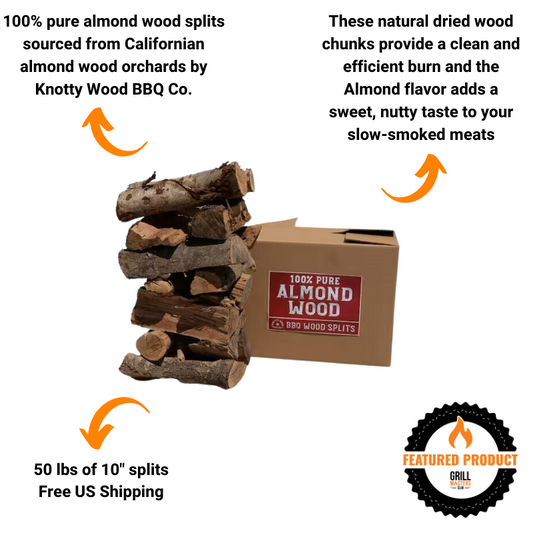
A chunk or two is plenty for a batch of wings. If you're running a pellet grill, a fruit wood blend does the job without any thought. On a kettle or offset, the cherry and pecan fruitwood 2-pack covers both of the best wing woods.
Sauce timing, and dust versus glaze
There are two schools of wing finishing, and they're not really in competition. They do different jobs.
Dust
A dry seasoning tossed on the moment the wings come off the heat, while the skin is still hot and slightly tacky. The dust sticks without adding any moisture, so the skin stays crisp for as long as it takes people to eat them. This is what wing joints do when they serve "dry rub" wings, and it's the move if you're cooking for a crowd and the wings might sit for ten minutes. A honey BBQ style dust like Kosmos Q Honey BBQ Wing Dust is built for exactly this.
Glaze
Sauce applied in the last 10 to 15 minutes of the cook, so it tightens and sets against the skin instead of sitting on top of it. Brush it on with a silicone mop brush, close the lid, and give it five minutes. Then do it again. Two thin coats beat one thick one every time. Our Sticky Peach Habanero BBQ Wings are a good example of a glaze built in layers.
Toss
The buffalo bar method: wings go straight from the heat into a metal bowl with sauce and get tossed. Fastest, sauciest, and the skin softens within a couple of minutes. Perfectly legitimate for a classic buffalo wing, where nobody expects a crackling skin. See our Grilled Peri-Peri Buffalo Wings for a toss done right.
The rule: Anything with sugar in it goes on in the last ten minutes. Anything without sugar can go on whenever you like.
Save some for dipping
Whatever sauce you glaze with, hold back a third of it and warm it separately to serve on the side. Sauce that has been on the grill has caramelized and thickened; sauce straight from the bottle tastes brighter. Having both on the plate makes the wings taste more like two dishes than one.
When are they done?
The food safety answer is 165°F internal, measured in the thickest part of the drumette without touching bone. That's the USDA minimum for poultry and it's not negotiable.
The texture answer is higher. Wings are full of connective tissue, and collagen doesn't start breaking down meaningfully until around 170°F. Most pitmasters pull wings between 175°F and 185°F, where the meat goes tender and pulls cleanly off the bone without drying out. Unlike chicken breast, wings have enough fat and collagen that the extra 15 degrees helps rather than hurts.
An instant read thermometer takes the guessing out of it. Wings are small enough that thirty seconds of probing beats any amount of poking and staring.
Do wings need to rest?
Barely. Two or three minutes is plenty, and it's mostly so you don't burn your mouth. A long rest just lets the skin go soft.
Troubleshooting
| Problem | Cause | Fix next time |
|---|---|---|
| Rubbery skin | Skin was wet, or the fat never rendered | Dry brine overnight, uncovered on a rack. Add a high-heat stage. |
| Burnt, bitter sauce | Sugar went on too early | Sauce in the last 10 minutes only. |
| Crisp outside, chewy meat | Pulled at 165°F | Take them to 175°F to 185°F. |
| Soapy or metallic taste | Baking soda instead of powder, or too much powder | Aluminum-free baking powder, 1 tsp per pound. |
| Overwhelming smoke flavor | Too much wood, or wood too strong | One or two chunks of apple or cherry. |
| Flare-ups and black spots | Rendered fat hitting direct flame | Cook indirect first, sear last, and stay at the grill. |
| Uneven doneness | Flats and drums cook at different rates | Pull the flats a few minutes early. |
| Wings went soft on the table | Sauced too early before serving | Use a dust, or sauce right before it hits the plate. |
Rub and sauce pairings that work
The mistake people make is putting a sweet rub under a sweet sauce, which reads as one flat note. Build a savory base and let the sauce carry the sugar, or build a sweet-heat base and finish with something acidic.
| Base rub | Finishing sauce | What you get |
|---|---|---|
| Rufus Teague Chick N' Rub | Kinder's Buttery Buffalo | Citrus and garlic under a rich, buttery buffalo. The classic, done properly. |
| Ninjacue Honey Garlic Sriracha | Melinda's Thai Sweet Chili | Sweet heat on sweet heat, tied together by the garlic. Sticky and bright. |
| Plain salt, pepper and garlic | The Wing Man Buffalo Sauce | Nothing competing with the sauce. The purist option. |
| Rufus Teague Chick N' Rub | Kosmos Q Honey BBQ Wing Dust, as a finishing dust | No sauce at all, and the skin stays crisp for an hour. |
The first two pairings are the two cooks inside our Be My Wingman kit.
Skip the shopping list
The Be My Wingman chicken wing kit
4.9 out of 5 from 10 reviews. 100% of buyers recommend it.
Two complete wing cooks with the rubs, the sauces and the glazing brush already matched. One buttery honey garlic buffalo on the grill, one sweet-heat Thai chili off the smoker, both written out step by step.
- Grilled garlic honey buffalo wings. Rufus Teague Chick N' Rub plus Kinder's Buttery Buffalo. About 40 minutes on the grill.
- Smoked Thai chili wings. Ninjacue Honey Garlic Sriracha Rub plus Melinda's Thai Sweet Chili. About an hour on the smoker.
- Both recipes on the included postcard, plus the Grill Masters Club silicone mop brush for glazing.
Free U.S. shipping. Or build your own from our wing rubs and sauces.
Wing recipes to cook next
Every technique above shows up in at least one of these. Pick a flavor and put the guide to work.
Grill Masters Club wing recipes
- Grilled Garlic Buffalo Wings: a two-zone grill cook with a garlic butter buffalo sauce and blue cheese yogurt dip.
- Gameday Pineapple Chipotle Wings: a sweet, smoky butter glaze with a hot honey finish.
- Jalapeño Margarita Wings: a cocktail turned into a wing, with lime and jalapeño.
- Grilled Peri-Peri Buffalo Chicken Wings: lemon and garlic peri-peri in a buffalo-style toss.
- Smoked & Glazed Maple Bacon Chicken Wings: baking powder skin, a high-heat finish and a maple bacon glaze.
- Smoked Peach Bourbon Wings with Goat Cheese Crumbles: a full smoker cook from pitmaster Bob Trudnak.
- Sticky Peach Habanero BBQ Wings: low and slow, then lacquered in a blended peach habanero glaze.
- Sweet Heat Wings: crispy, smoky and a little spicy, for a weeknight or a weekend cook.
Questions we get asked
How long do you smoke chicken wings?
At 250°F, about 45 to 60 minutes, followed by 10 to 15 minutes at 425°F or higher to crisp the skin. At a steady 275°F with no second stage, plan on 90 minutes to 2 hours. Go by internal temperature rather than the clock: pull them between 175°F and 185°F.
Do I really need baking powder for crispy wings?
No, but it is the easiest single upgrade available. Dry brining with salt alone and leaving the wings uncovered in the fridge overnight gets you most of the way. Adding aluminum-free baking powder at 1 teaspoon per pound takes you the rest.
Can I dry brine wings for too long?
Beyond about 24 hours the skin starts to go leathery and the salt pushes past seasoning into curing. Four hours is the minimum worth bothering with, 12 to 18 hours is the sweet spot, 24 is the ceiling.
Should I sauce wings before or after cooking?
After, or in the last 10 to 15 minutes. Any sauce containing sugar will burn if it goes on at the start. If you want a set, sticky glaze rather than a wet toss, brush on two thin coats in the final stretch with the lid closed between them.
What temperature are chicken wings done at?
165°F is the USDA safe minimum. For texture, most cooks pull wings at 175°F to 185°F, where the collagen has broken down and the meat pulls cleanly off the bone.
Why are my smoked wings rubbery?
Almost always because the cook never got hot enough to crisp the skin, or because the wings went on wet. Smoke at 250°F is below the temperature that renders and browns chicken skin properly. Add a high-heat finishing stage and dry brine the night before.
What's the best rub for chicken wings?
A savory, garlic-forward rub under a sweeter sauce is the safest bet, because the sauce brings the sugar. If you're skipping sauce, finish with a wing dust instead. Our chicken wing rubs and sauces collection groups the dry rubs, dusts and glazes we've cooked with.
Flats or drums?
Flats have more skin per bite and hold sauce better. Drums have more meat and are easier to eat one-handed. Cook both, and pull the flats a few minutes earlier because they finish faster.
Can I make good wings in the oven?
Yes. Dry brine, use a wire rack over a sheet pan so air moves underneath, 30 minutes at 250°F then 40 to 45 minutes at 425°F. You lose the smoke, not the texture.
Join 100,000+ Grill Masters
Get weekly recipes, pro tips, and exclusive deals sent straight to your inbox. Plus your free Pit Card download and 10% off your first order.